April 30, 2026 · Matt Hildreth
Three Things Every Rural County Chair Should Take From the DNC’s 2026 Playbook
If a rural county chair did only three things from this document, I'd argue they should be these.
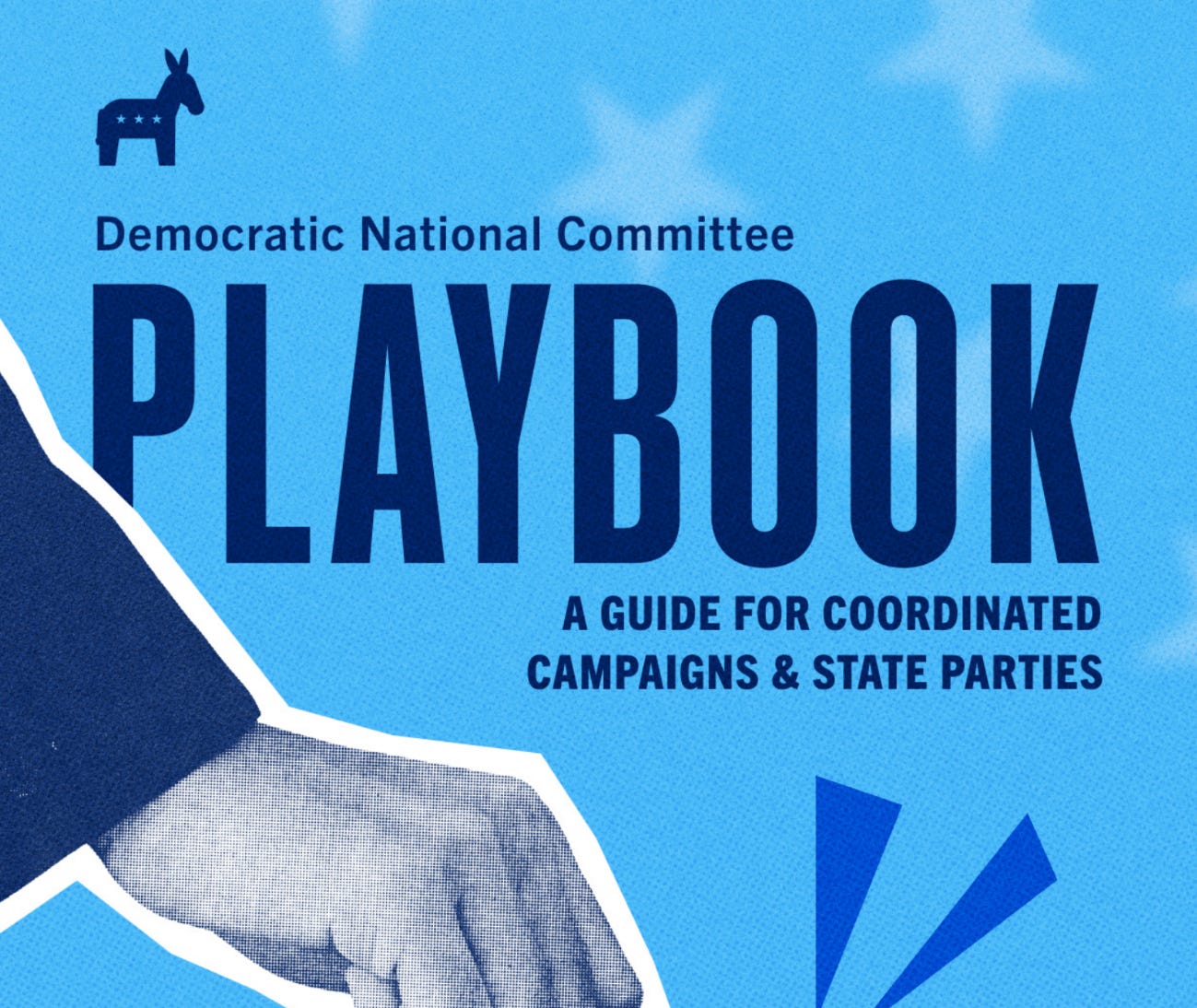
I had a chance to sit down and read the DNC’s 208-page 2026 playbook this week, cover to cover. It’s a substantial document — six demographic cohort studies, case studies from the Virginia and New Jersey 2025 wins, a deep dive on Swing Left’s Ground Truth canvassing program, a full storytelling toolkit, and operational guidance on hiring, digital strategy, and cybersecurity. There’s a lot in there.
But I want to be useful to the people I work with most, so let me cut through it. If you’re a county chair, a precinct captain, or a volunteer leader anywhere in the country, here’s what’s most helpful for you. The good news is that the highest-leverage takeaways are also the most accessible. You don’t need a budget. You don’t need a paid staff. You don’t need permission from anyone above you. You can start any of these this week.
1. Adopt the Local Listeners Script and Train Your Volunteers in Deep Listening
The single most consistent finding across the entire playbook is that voters are tired of being asked for things and hungry to be heard. Swing Left’s Ground Truth pilot ran 467 conversations across 12 swing districts and found that roughly two out of three doors turned into substantive ten-minute conversations when canvassers led with listening instead of pitching. Even more striking: about one in four voters that campaigns had coded as Republican showed real openness to Democrats when somebody actually engaged them.
That’s an enormous untapped opportunity, and the DNC has made the entire training program free.
Go to democrats.org/local-listeners and you’ll find a complete seven-week curriculum, the full call script, and supporting materials. The script is built around four questions that flip the traditional canvass on its head. It opens with how the voter feels about the country’s direction, then asks what’s been most concerning for their family, then asks what they wish politicians knew about their community, and only then asks about the upcoming election.
Train your volunteers in this approach over a single evening. Practice it together. The hardest part is unlearning the impulse to argue or correct — when a voter says something you disagree with, the script teaches you to validate the feeling first, then get curious. That single shift will transform your committee’s voter contact program.
2. Lead With Affordability and Stay Disciplined About It
The DNC commissioned serious polling and focus group research after the 2025 New Jersey and Virginia wins, working with Bendixen & Amandi, Brilliant Corners, and Anthony Williams Consulting. The finding was unmistakable: across every demographic group studied, cost of living was the dominant issue. Groceries, housing, prescriptions, utility bills, insurance, child care, wages. That’s the conversation voters are having at their kitchen tables, and it’s the conversation they want their elected officials to be having too.
The Working Communities cohort research found the same thing. The Ground Truth qualitative data confirmed it. Three independent research streams pointing at the same conclusion is about as clear a signal as you’ll ever get in politics.
When your candidates speak, when your social posts go out, when your volunteers knock doors, when your committee writes letters to the editor — the through-line should keep coming back to what voters can feel in their bank account and at the kitchen table.
This isn’t about ignoring other issues. It’s about connecting them. Healthcare is an affordability issue. Education is an affordability issue. Even foreign policy lands better when you can connect it to the price of the things people buy. Lead with affordability, and the other conversations get easier.
3. Start a Storybank This Week With a Google Sheet
The Storytelling Toolkit in this playbook comes from the firm that produced eight of the top ten most persuasive Harris ads in 2024. Their central message is simple: real people are the most effective messengers we have, and the campaigns that win are the ones that built their roster of real people before they needed them.
Their hard-won lesson number one: don’t wait. Scrambling to find the right voice when you’re already in the moment is a losing position.
The good news is that this is genuinely free and easy. You don’t need video equipment. You don’t need a media budget. You need a Google Sheet with these columns:
Name and contact info
Location
Two or three sentence summary of their story
Which issue it relates to (healthcare, cost of living, education, veterans, small business, etc.)
How you found them
Whether they’ve agreed to be contacted
Every conversation your committee has with a constituent who shares something meaningful — the parent navigating childcare costs, the small business owner squeezed by tariffs, the retiree on a fixed income, the family that benefits from a local infrastructure project — gets a row in that sheet.
Six months from now, when a candidate needs a voice for a campaign ad, or your committee needs to respond to breaking news, or a reporter calls looking for a real person to interview, you’ll have a roster ready. The toolkit puts it perfectly: this works whether you have a big budget and a dedicated team, or you’re one volunteer with an iPhone and a Google Sheet.
Why These Three
Those three are free, fast, and individually high-leverage. Everything else in the playbook — the digital strategy guidance, the cybersecurity setup, the small-business canvass program, the validator recruitment work, the influencer programs — is real and worth your attention eventually. But it’s all second-tier compared to these three.
Here’s why. Listening transforms how voters experience your committee. Affordability discipline gives every conversation a clear and resonant message. A storybank turns every conversation into a future asset. Together, they create a flywheel: better conversations produce better stories, better stories produce sharper messaging, sharper messaging makes the next round of conversations easier. Each one makes the others stronger.
And every single one of them is something you can start this week, with no money, no permission, and no infrastructure beyond what you already have.
That’s the most encouraging thing about this playbook. The most powerful tools in it are also the most accessible. The Democrats who win in 2026 are going to be the ones who show up early, listen carefully, talk about what voters actually care about, and build the relationships that last beyond a single election. Every county chair in America can do that work.
The opportunity is right in front of us.
Originally published on Substack. Comments and discussion happen there.
Newsletter
Subscribe to Field Notes
Field reports, rural campaign analysis, and dispatches for the candidates and causes building rural power. Free, straight to your inbox.